Britain is something of a melting pot when it comes to culture. Our nation’s proximity to Europe and its appetite for exploration and conquest mean that for centuries, culinary influences have come from all over the world. From as near as France to as far as India and the Americas, spices, vegetables, grains and other ingredients have long played an integral role in our food. Here, we explore some of the European influences on British dishes.
Sausages and mash
There’s nothing more British than a steaming plate of bangers and mash, right? Except that sausages are a little less traditionally English than you might think. The British royal family has German heritage, and as far back as the late 16th century a German sausage dish called Mettwurst was served at the royal table. Made with local pork, which is typically smoked and cured, it is often flavoured with garlic and spices – not too unlike the British bangers that are served with mash today.
Fish and chips
If you’ve read our post on how fish and chips became a national dish you’ll know that this quintessentially British food is in fact rooted in Jewish culture. Fried fish was popular among Spanish and Portuguese Jews, and was brought to Britain by them in the 16th century. The chips are thought to have been added when the French Huguenots arrived in England some years later. The addition of salt and vinegar came several centuries afterwards, but is now almost as much a part of the dish as the fish and chips themselves.
Beef Wellington
This dish is generally agreed to have been created in celebration of the first Duke of Wellington’s victory over Napoleon at the Battle of Waterloo. But despite its very English name, it takes its inspiration from both Greece and France. The practice of wrapping meat in a flour and water paste to seal it before cooking originated in Greece, while the dish itself closely resembles the French filet de boeuf en croute.
Christmas cake
Christmas cake as we know it today began to develop around the 16th century. Made with dried fruit and nuts – and often ‘fed’ with a helping of brandy or whisky – it’s a staple of the British festive season. In the 18th century, wealthier families began to wrap their Christmas cake in marzipan, a sweet almond confection that has been a speciality in Toledo, Spain, since the 12th century. Portugal, Italy and Germany also claim to have been making it for centuries; either way, this traditional British cake is inspired by Europe.
Discover rich flavours at Studio Five
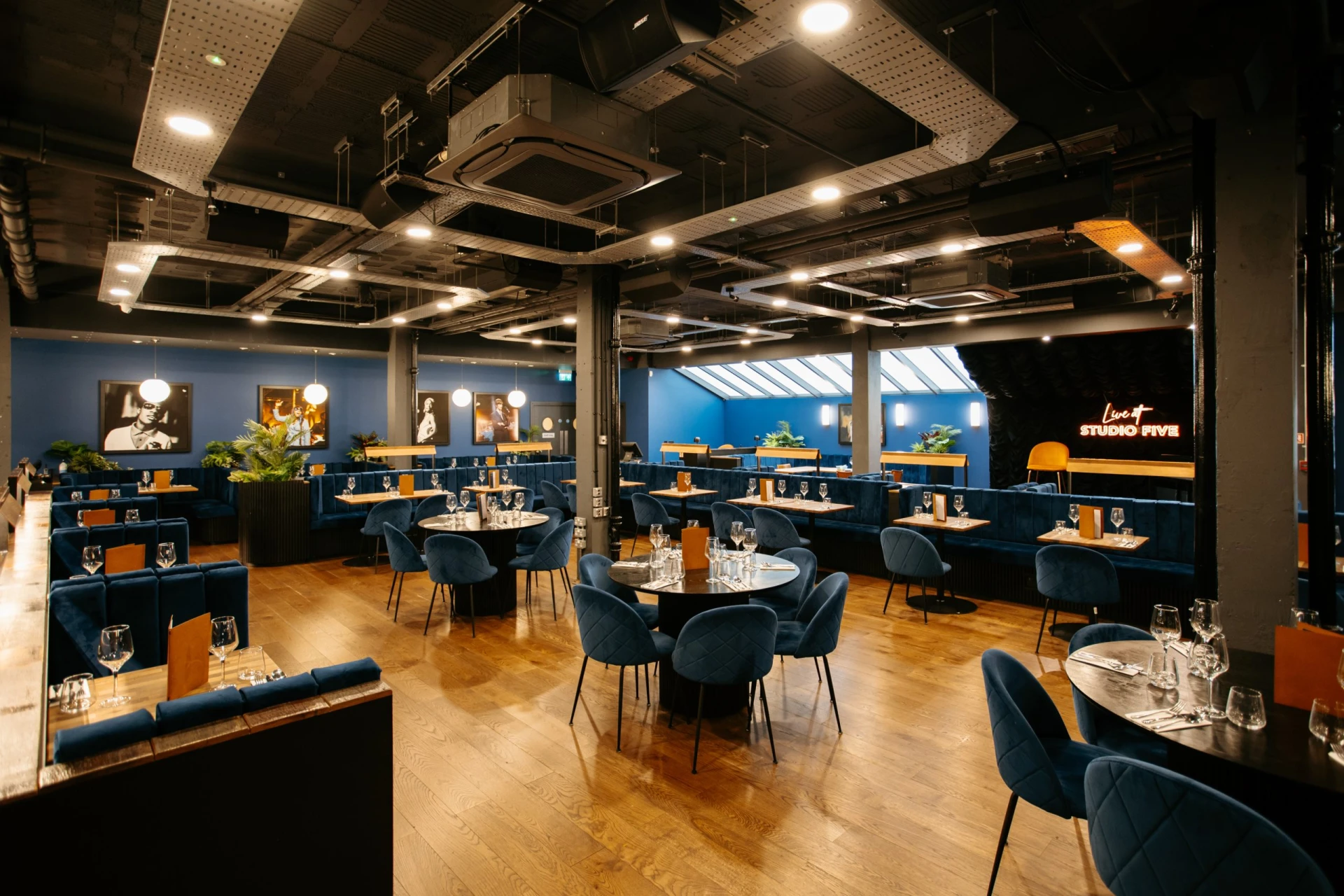
If you’re looking for places to eat near Wembley, why not book a table at Studio Five? Located in the Troubadour Wembley Park Theatre complex, we offer British dishes with a modern twist alongside programs of live music. We’re also one of the Wembley eating places that offers a pre- and post-show menu for those heading to see Starlight Express. Visit us today and discover one of the most unique places to eat in Wembley.