Across the UK you will find venues serving fish and chips, from takeaway places by the sea to some of London’s best restaurants for lunch. Soft, flaky fish coated in crispy batter and served with golden chips has been a favourite among the British for centuries – but its origins lie with Spanish and Portuguese Jewish populations. Let’s take a look at how fish and chips arrived on our shores and became an English staple.
Pescado frito
The story begins in the 15th century, when Jews began to be persecuted for their religion in Spain and Portugal. While some families fled, others pretended to convert to Christianity while secretly practicing Judaism. These families were forbidden by their faith to cook on the Sabbath, so they would fry fish – typically cod or haddock – in a thin batter on a Friday, which would stay fresh for their meal on Saturday. They called it ‘pescado frito’.
Fried fish comes to Britain
Jewish immigrants moving to London in the 16th century began to sell fried fish from trays hung about their necks. Charles Dickens even makes a reference to ‘fried fish warehouses’ in Oliver Twist (1837). In these forerunners of the modern chippy, bread or baked potatoes were served alongside the battered fish.
In the late 19th century, fried fish found its way to all corners of the UK. The advent of trawl fishing and railways meant that inexpensive fish could be quickly and easily transported, opening up a market far and wide for this delicious meal.
The addition of chips
While historians remain uncertain of the origins of chips, it’s possible that Huguenots – French protestants – came to England in the 17th century bringing a penchant for fried potatoes with them. Again, thanks to Charles Dickens, we know that chips were an established food in England by the mid-19th century: his Tale of Two Cities makes reference to “ husky chips of potato fried with some reluctant drops of oil”.
Joseph Malin, an Ashkenazi Jew, is credited with combining fish and chips, opening the UK’s first fish and chip shop in 1860 in London’s East End. It was so successful that it remained in business until the 1970s. Near Manchester a similar stand opened by John Lees in the early 1860s.
A cultural phenomenon
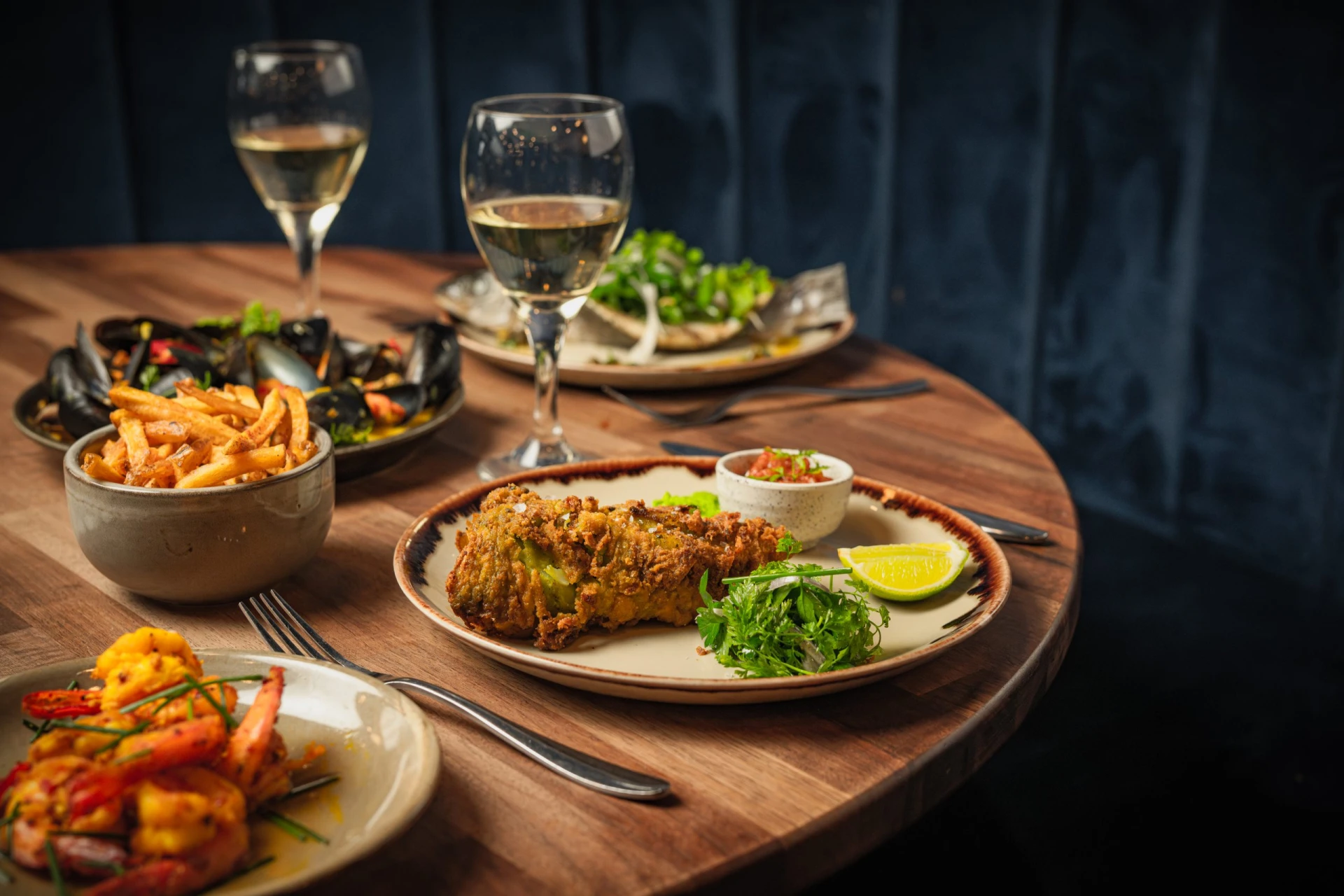
Fish and chips took off at an incredible pace thereafter. By 1910, there were 25,000 fish and chip shops in the UK and the dish was considered so integral that it stayed off the ration list during World War II. There’s even a story that British soldiers storming the Normandy beaches on D-Day would identify each other by calling ‘Fish!’ and waiting for the response, ‘Chips!’. Today, there are an estimated 10,500 chippies in the UK, collectively serving some 360 million meals of fish and chips every year. Of course, variations have arisen, such as our spiced fish and chips at Studio Five. Our dish coats tender cod fillet in South Asian-style lightly spiced batter, adding minted pea puree and chilli ketchup on the side.
If you’re looking for ‘the best places for lunch near me’ or the ‘best restaurants near me for dinner’, book a table at Studio Five today and enjoy contemporary cuisine in a vibrant, relaxed atmosphere.